AI Visibility Study Zurich 2026: why ChatGPT, Gemini and Claude recommend whom they recommend
A data study on AI recommendations in the Zurich market. We asked the three assistants the questions customers ask, across 12 industries, and traced every single recommendation back to its source. Below: the key findings, a preview of the report pages, and what the full study contains.
- AI answers collected
- 1,515
- mentions traced to a source
- 14,135
- firms measured incl. controls
- 5,110
- industries in the Zurich market
- 12
How does a firm get into an AI recommendation? In two stages, and most budgets go to the wrong one.
Stage one: getting on the assistant's radar at all. That is driven by the classic signals — links, traffic, reviews. Stage two: being picked from the page the assistant is reading while it answers. The classic signals still help there, but only a little. Simply being on that page is worth several times more than being the stronger firm on it. The bigger lever is not on your website. It is on other people's pages.
- being on the page the assistant reads
- 8.2×
- being the stronger firm on that page
- 1.3×
The key findings of the AI visibility study: six of the eleven, in plain language
Rounded to what holds across re-runs. The exact tables, per industry, are in the report.
- 01≈ 3 of 4
Google's ranking is not the shortlist.
Roughly three quarters of the firms the assistants recommended are not in Google's top 10 — even for the exact searches the assistants ran themselves. AI recommendations are a separate game with its own scoreboard.
recommended firms outside Google's top 10 - 022 in 5
Two in five recommendations have no source at all.
About 40 percent of all mentions have no recognisable source — the assistant already knew the firm. For the remaining 60 percent it opened a page while answering: the firm's own website or a third party's. That share is the part you can influence.
a page was openedno source - 038.2×
Being on the page beats being the better firm.
Among firms on a page the assistant demonstrably read, the stronger half was picked 42 percent of the time, the weaker half 32 percent — a factor of 1.3. Being on that page at all is worth 8.2×.
8.2×on the page1.3×stronger on the page - 041.5×
Where you stand on the page changes your odds.
Firms in the top third of a list page are named in 31 percent of cases, firms in the bottom third in 21 percent — one and a half times the odds for the same page and equally strong firms. Moving up a list usually costs an email, not a budget.
top third vs. bottom third of the same page - 051.6× · 1.35×
Cited pages look different from ignored ones.
Own pages with an FAQ section are cited about 1.6 times as often; pages that mention Zurich explicitly about 1.35 times. The report shows word counts, structure and what a cited page contains.
1.6×with FAQ section1.35×mentions Zurich - 06Threshold
Reviews and links work — up to a point.
Both raise the chance of being named steeply, then flatten. Past the threshold, more of the same changes almost nothing. The two thresholds, with the tables behind them, are in the report.
exact thresholds in the full report
Preview: what the report pages of the study look like
One report in two parts: the eleven findings and the 14-step guide — as a PDF in an English and a German edition. Plus the 22-point AI visibility checklist. Six pages from the actual report; the blurred ones are part of the full study.
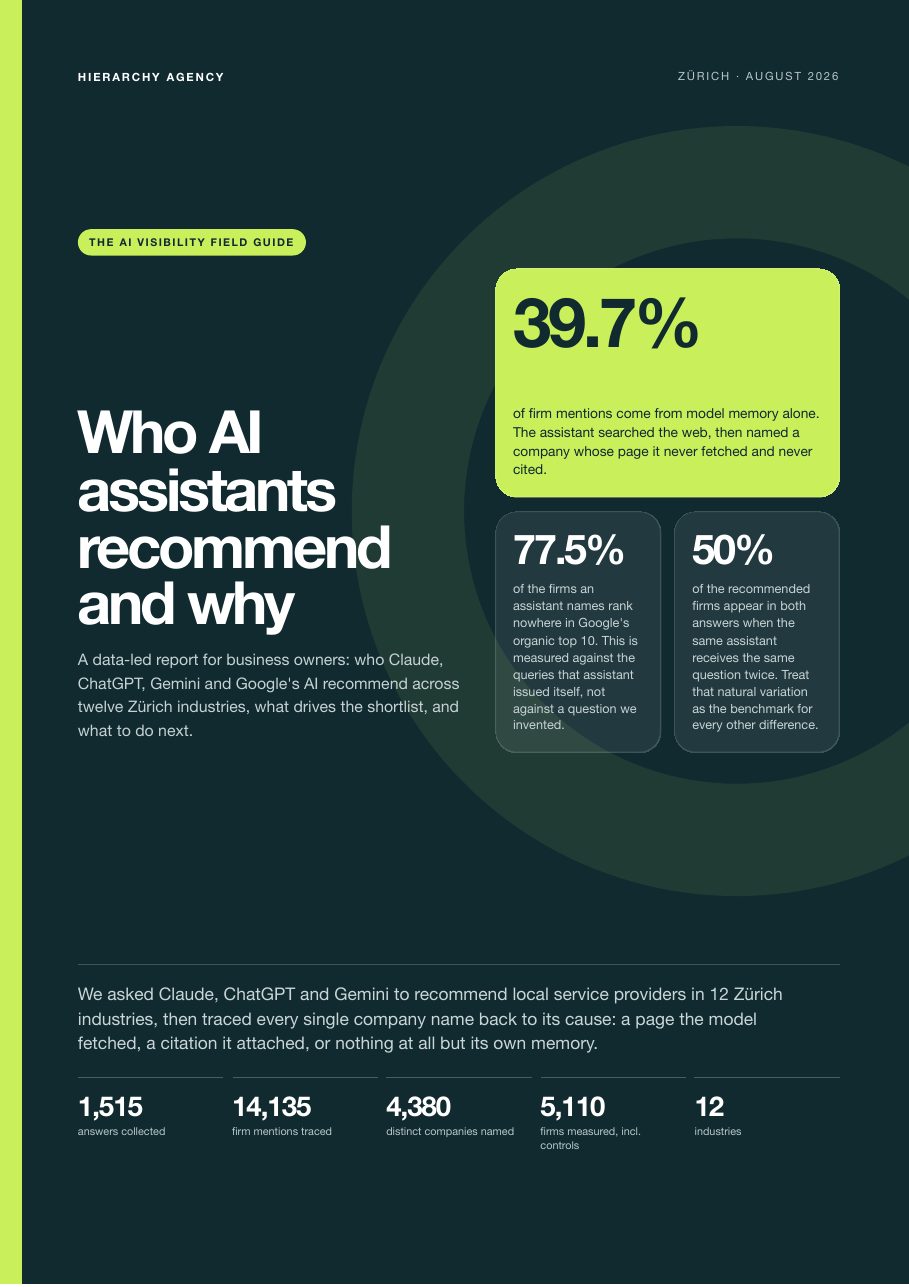
Cover — «Who AI assistants recommend, and why» 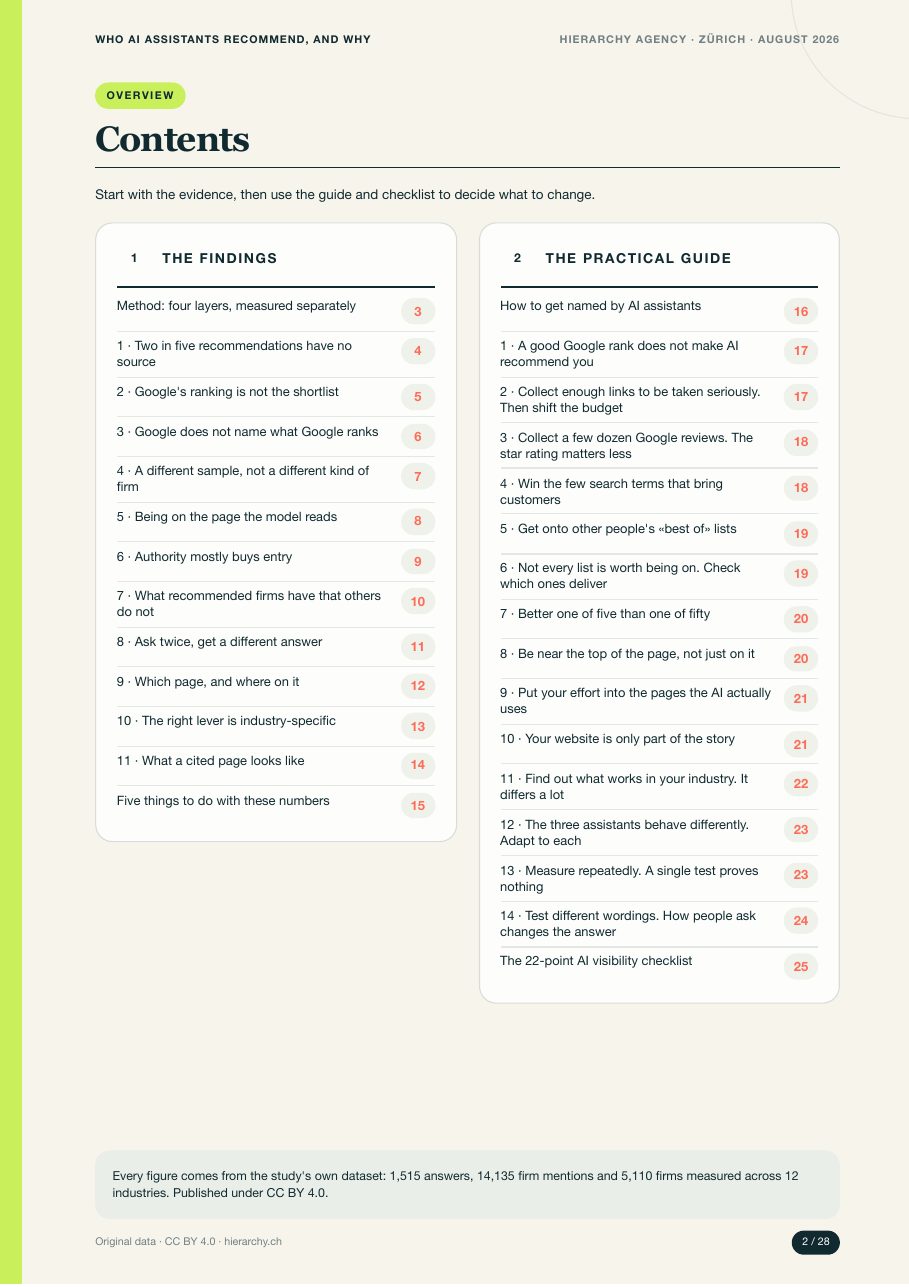
Contents — 11 findings, 14 steps 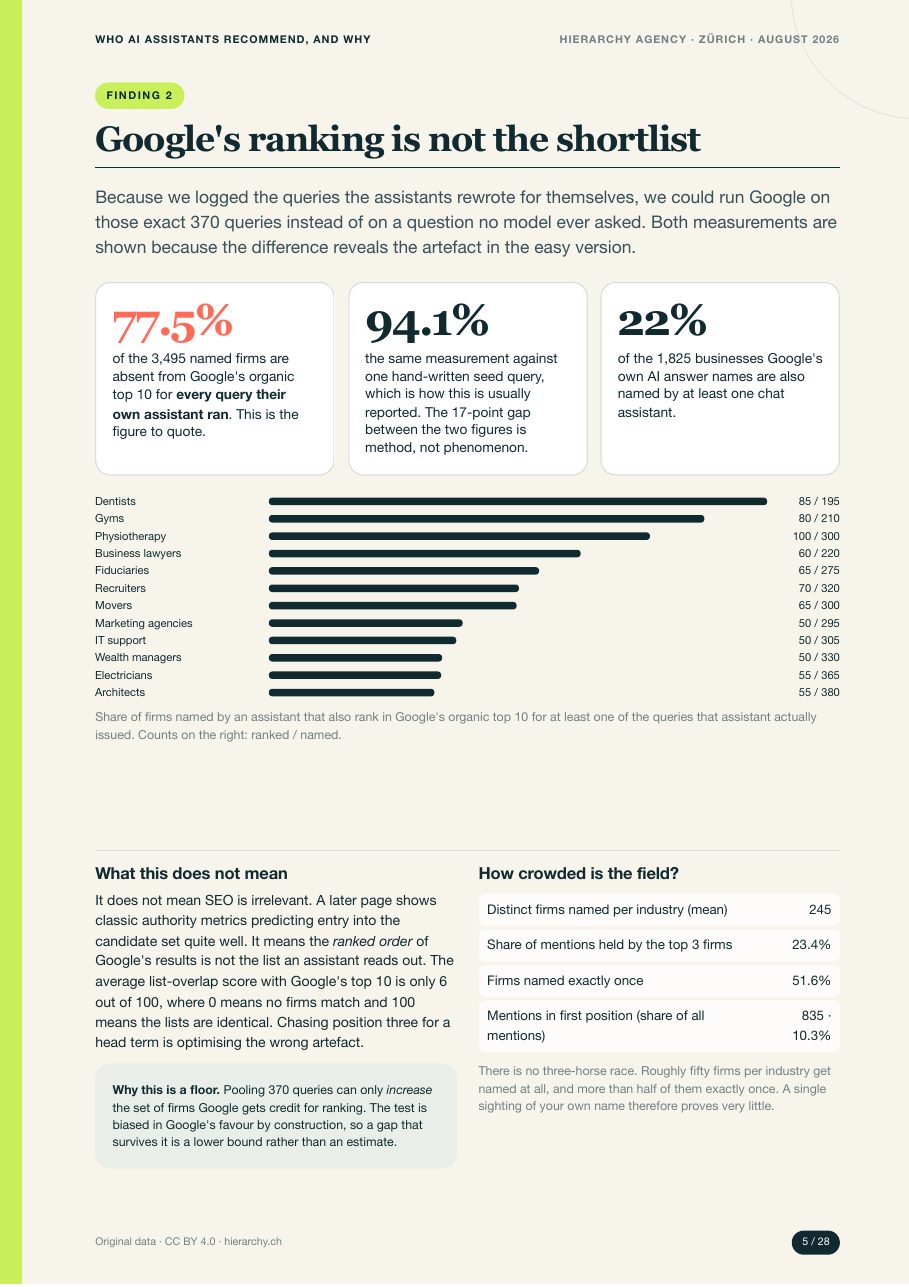
Finding 2 — Google's ranking is not the shortlist 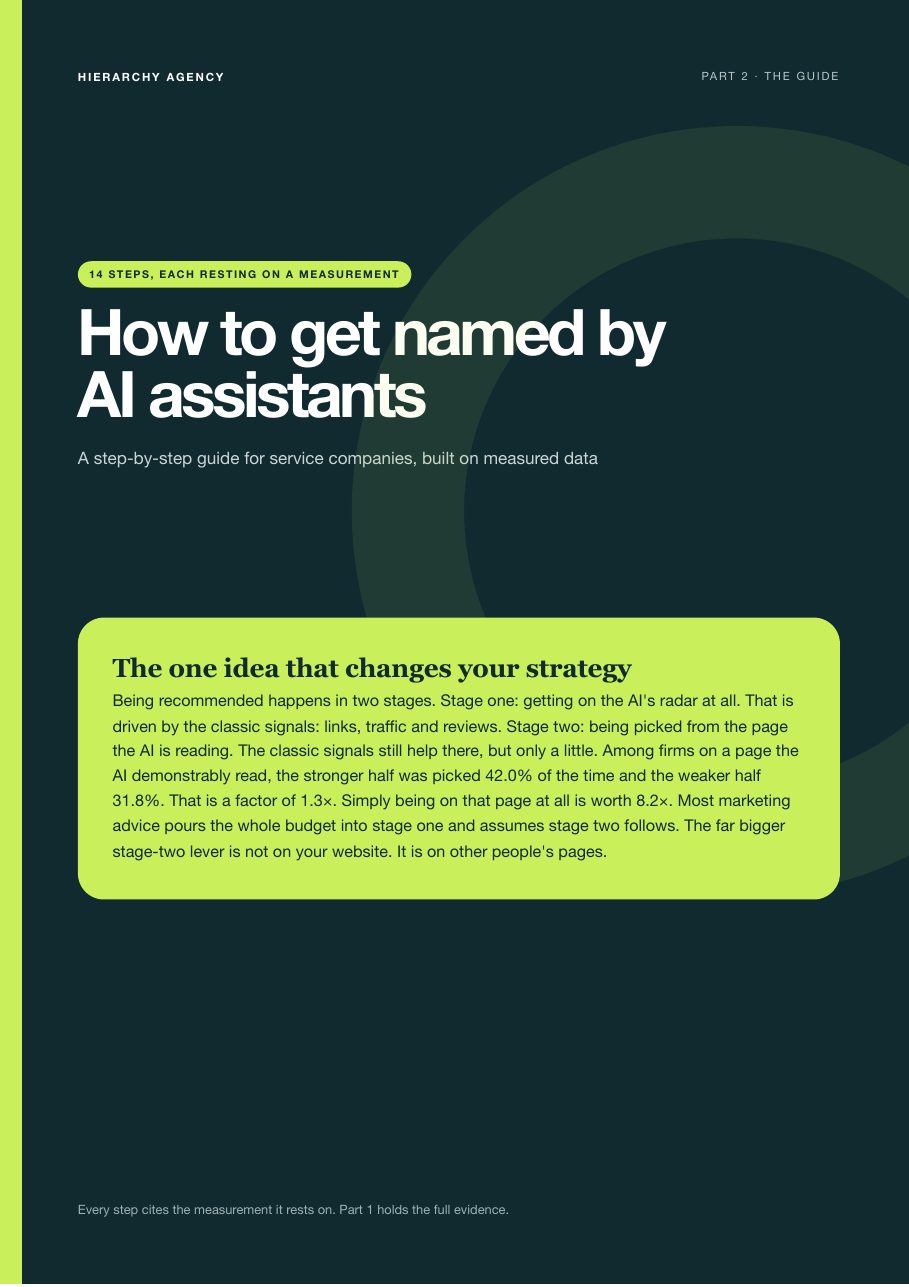
Part 2 — the one idea that changes your strategy 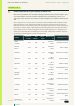 In the full report
Step 11 — what works in your industry, incl. the best list page 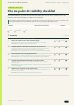 In the full report
The 22-point AI visibility checklist — page 1 of 4
Excerpt · Step 1 of the guideTreat AI recommendations as a separate game with its own scoreboard. Being number 1 on Google does not get you recommended. Not being in the top 10 does not shut you out.
What is included in the AI visibility study?
Part 1: the eleven findings
- 01Two in five recommendations have no source
- 02Google's ranking is not the shortlist
- 03Google does not name what Google ranks
+8 more findings — titles, figures and tables in the report
Part 2: the 14-step guide to AI visibility
- 01A good Google rank does not make AI recommend you
- 02Collect enough links to be taken seriously — then shift the budget
- 03Collect a few dozen Google reviews — the star rating matters less
11 more steps plus the 22-point checklist — full instructions, tables and examples in the report
- Lever tables for all 12 industries, incl. the best list page per industry
- The named list pages and directories that convert listings into recommendations
- Review and link thresholds with the tables behind them
- The 22-point AI visibility checklist (4 pages, tick-box format) we use in client audits
- A prompt set for your own measurement — plus what the study cannot say
- English and German edition
What does the study give you? What you can do on Monday
- Know whether your industry is won through your own website, through third-party pages, or through what the models already know
- Have a list of the specific pages worth being on — and which ones to skip
- Know how many reviews and links are enough, so you stop paying for more of the same
- Restructure your key pages the way cited pages are structured
- Brief an agency — or yourself — with 14 steps in priority order
- Run your own measurement instead of trusting a single screenshot
Owners of Swiss SMEs
You sell a service in or around Zurich and keep hearing you need AI visibility. The study tells you what is true and what to do first.
Marketing leads
You need to defend a budget. The tables give you thresholds, levers and a prioritised plan instead of opinions.
Agencies and consultants
The per-industry tables replace weeks of guessing. Use them to brief, to audit and to sell with evidence.
Method: how the AI visibility study was built
- 01
Ask like customers ask
ChatGPT, Gemini and Claude answered purchase-intent questions across 12 industries in the Zurich market — repeatedly, in German and English, with live web search.
- 02
Trace every mention
Each of the 14,135 mentions was classified: from the model's memory, from the firm's own website, or from a third-party page — and every cited page was captured and analysed.
- 03
Measure the firms
5,110 firms including control groups were measured on links, traffic, reviews, listings and site structure, so the study can say what separates the named from the invisible.
Hierarchy is itself a Zurich marketing agency and appears in the marketing-agency sample. It was excluded from every ranking and table. No named firm is quoted; findings are reported in aggregate.
Buy the AI visibility study: the full report for CHF 29, instant download
- All 11 findings with figures, charts and tables
- The 14-step guide in priority order
- Lever tables and the best list page for each of 12 industries
- 22-point AI visibility checklist, review and link thresholds, prompt set
- English and German edition
Frequently asked questions about the AI visibility study
What is the AI Visibility Study Zurich 2026?
A data study on how AI assistants recommend firms in the Zurich market. Hierarchy asked ChatGPT, Gemini and Claude purchase-intent questions across 12 industries — 1,515 answers — and traced all 14,135 mentions to their source. 5,110 firms including control groups were measured to find out what separates recommended firms from invisible ones.
What do I get for CHF 29?
The full PDF report in an English and a German edition. Part 1 holds the eleven findings with figures, charts and per-industry tables; Part 2 the 14-step guide in priority order — including the review and link thresholds, the list pages that deliver per industry, the 22-point AI visibility checklist and a prompt set for your own measurement. Both editions download immediately after payment.
How was it measured?
Through the assistants' APIs with live web search, repeatedly and in both languages. Every mention was classified as memory, own website or third-party page; every cited page was captured and analysed; every firm was measured on links, traffic, reviews, listings and site structure against a control group.
Which industries are covered?
Accounting, law firms, marketing agencies, IT services, architects, recruiters, movers, physiotherapy, dentists, electricians, wealth managers and gyms — all in the Zurich market.
Is Hierarchy ranked in its own study?
No. Hierarchy appears in the marketing-agency sample but was excluded from every ranking and table. The findings describe the market, not us.
Can I check my own visibility first?
Yes — the free AI visibility check shows within minutes whether ChatGPT, Gemini and Claude name your company today. The study then tells you why, and what to change.
How current are the data?
The answers were collected in summer 2026 and the report published in August 2026. Assistants change; the guide includes a step on measuring repeatedly so you can track your own numbers over time.
Stop guessing why the competition gets named in ChatGPT
Get the study, or start with the free check and see where you stand today.
Prefer to have it done? See SEO & AI visibility
About the author