AI workshops / programme 03
AI workshop for developers: code efficiently, design systems, run infrastructure
A programme for software and product teams. We work in your repository, with Claude Code, GitHub Copilot, Cursor or Codex: context and effort control, verification loops, AI-supported design of complex systems, deployment and infrastructure — and the question of how review and ownership work when much of the code is generated.
We train inClaude CodeGitHub CopilotCursorCodexMCP
- Individual quoteafter the intro call
- 4-person team, ZürichStrategy and delivery
- 5 building blocks4 steps
Starting point
Why AI-assisted development claims the saved time back at review
AI-assisted development is already daily practice in most teams — just at very different levels. The typical patterns: prompts written for older models that today cause over-verification and bloated diffs. Sessions where the context is so full that quality tips over. Generated code that looks plausible, misses edge cases and eats the time at review that was saved up front. And costs nobody knows per task. The differences between a team that works well this way and one that struggles are learnable and surprisingly concrete: context discipline, the right effort level, and a check the model can run itself.
What we do
What the AI workshop for developers covers
- 01
Coding with AI efficiently and cost-consciously
Model and effort choice per task type — Claude, GPT or Gemini — context management across long sessions, prompt patterns that still work today — and the ones you should delete from your project files. Plus cost transparency: what a task consumes and which levers cut that by a multiple.
- 02
Verification loops, tests & review
The biggest quality lever: giving the model a check it can run itself — test suite, build exit code, linter, comparison script. We build those loops in your repository and define what human review concentrates on afterwards.
- 03
Designing complex systems with AI
From requirement to a robust design: specifications a model can actually implement, a planning step before implementation, weighing variants against each other, breaking migrations and refactors into verifiable steps — instead of hoping for one large diff.
- 04
Deployment & infrastructure with AI
Infrastructure as code, CI/CD pipelines, logs and monitoring with AI support: generating and checking configuration, triaging incidents, preparing postmortems. Including the guardrails that are non-negotiable — secrets, permissions, environments and what an agent must never do without confirmation.
- 05
Agents, automation & security in daily engineering
Capturing recurring work as automation: skills, hooks, subagents and MCP connections to your systems — plus the security questions that come with it: prompt injection from third-party content, handling secrets and customer data, dependencies and licences in generated code.
How it runs
How the AI workshop for developers runs
- 01
Review repository & ways of working
We look at stack, tests, CI and the existing project and prompt files, and collect the friction points from the team.
- 02
Hands-on in your own code
A day on real tickets from your backlog: context setup, effort choice, planning step, implementation and verification in rotation.
- 03
Commit the setup
Project rules, verification scripts, automations and security guardrails land in the repository — not in a document.
- 04
Review after 30 days
We look at real diffs, review time and cost per task, and adjust the setup where daily use has shown the gaps.
What changes
What changes in engineering after the AI workshop
- 01
One shared setup in the repository instead of seven personal ways of working.
- 02
Verification loops that catch errors before a human starts the review.
- 03
Traceable cost per task — and a deliberate choice of model and effort.
- 04
Smaller, verifiable diffs instead of large changes with no clear scope.
- 05
Clear rules for secrets, customer data and what an agent never does alone.
In practice
Questions
Frequently asked questions about AI Workshops for Developers
Who is the developer programme for?
For software, platform and product teams — from engineers to tech leads, DevOps and data engineering. We work in your language and your stack. A group of four to ten people works best; larger teams get split so everyone can work on their own machine.
Which tools do we work with?
Whatever you use or are evaluating — typically Claude Code, GitHub Copilot, Cursor or Codex, plus your IDE, CI and cloud environment. The principles are largely tool-independent: context, verification, scope control and cost. We also point out where the tools genuinely differ and where it's just marketing.
We have strict security and data protection requirements. Does that work?
Yes, that's part of the programme. We work to your rules — enterprise access without training on your code, handling of secrets and customer data, excluding sensitive repositories, approval requirements for agents with write or deploy rights. On request we also walk through the prompt-injection risks that arise when an agent reads third-party content.
Does AI actually make experienced developers faster?
Not automatically, and the evidence is mixed — in a widely cited study on large open-source repositories, experienced developers were in fact slower with AI assistance even though they felt faster. That's exactly why this programme is built around measurement: we look at review time, error rate and cost per task instead of gut feel, and work out the task types where the gain is real in your context.
How deep does the programme go technically?
Deep enough for experienced developers. We work on real tickets from your backlog, cover architecture, migrations and infrastructure, and discuss edge cases rather than hello-world examples. For mixed experience levels there are tiered exercises so nobody is left waiting.
Next step
Where does your team lose time today — up front or at review?
Describe your stack and two typical tickets. We'll propose a programme that starts in your code — on-site in Zurich or remote.
About the author
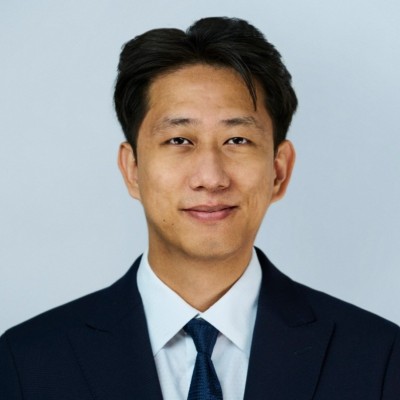
Tenzin Langdun
AI Expert & Marketing Lead at Hierarchy
Tenzin is an AI expert and marketing lead with an MSc in Artificial Intelligence from the University of Bath and over 10 years of marketing experience across strategy, paid acquisition, and SEO. He has held roles at leading organisations including KPMG, EY, Siemens, and Adnovum — with expertise in AI, cybersecurity, audit and consulting, and the insurance sector. Together with Martin Oswald, he co-authored an award-winning research paper on AI-based cancer detection, published in Nature and recognised with the National Siemens Excellence Award and the Lab Sciences Award.