AI workshops & team enablement
AI workshops for companies: role-specific, not a tool demo for everyone
We don't teach a tool, we teach your work. Across three programmes — for agencies, for SMEs and for engineering teams — participants build on their own tasks during the workshop and leave with finished prompts, workflows and playbooks. We work with ChatGPT, Claude, Microsoft Copilot or Gemini — the tools you already have or plan to introduce. On-site in Zurich, across Switzerland, or remote.
We train inChatGPTClaudeMicrosoft CopilotGeminiClaude CodeCursor
- Individual quoteafter the intro call
- 4-person team, ZürichStrategy and delivery
- 6 building blocks4 steps
Starting point
Why most AI training stays ineffective
The usual pattern: half a day of tool demos, a room full of impressed faces, a few notes — and two weeks later the team works exactly as before. The reason is rarely a lack of interest. It's the missing link to real work: an accountant, a creative director and a backend engineer need completely different AI skills, yet all sit through the same generalist session. On top of that come the questions nobody answers — what data may I enter, what can I rely on, who checks the output? We invert it: role-specific programmes, real tasks from your business, and artefacts at the end that keep running in daily work.
What we do
How our AI workshops are built
- 01
Role-specific programmes, not generalist training
Three programmes with their own curricula: AI for agencies, AI for SMEs and AI for developers. Each works with the tools, tasks and quality standards of that role.
- 02
Fundamentals & AI literacy for every role
The shared foundation before every programme: how language models work, where they're reliable and where they aren't, how a good prompt is structured — and which data belongs in which tool.
- 03
ChatGPT and Claude in daily work
Both tools are part of every programme: projects and custom GPTs in ChatGPT, projects and artifacts in Claude, your own documents as context, templates and shared prompt libraries for the team. Plus a clear view of which tool has the edge on which task — and which plan (Team, Business, Enterprise) is right for your customer data.
- 04
Governance, data protection & an internal AI policy
revDSG, the EU AI Act and your own rules translated into practice: approval paths, documentation and a lean AI policy the team understands and actually follows.
- 05
Artefacts, not slides
Every workshop produces something usable: a prompt library, two to four working workflows, checklists and a playbook — all tailored to your tools and your tone of voice.
- 06
From live projects, not course material
The content comes from years of process automation in enterprise and SME environments. The people who train are the same people who build and run these systems for clients. Every example is a case that is running — including the mistakes made along the way and the fixes that held.
Choose a track
AI workshops for agencies, SMEs and developers, plus Mailchimp
AI for agencies
Content production with GenAI, ad creation, creatives and motion, creative systems and quality control — for teams that need more output without losing their signature.
OpenAI for SMEs
Process automation, lead generation and outbound, AI assistants on your own knowledge, customer service and analytics — the areas where SMEs win back hours fastest.
OpenAI for developers
Coding with AI efficiently and cost-consciously, verification loops, designing complex systems, and running deployment and infrastructure with AI support.
OpenMailchimp training
Audience and segments, templates, automations, deliverability and a revDSG-compliant sign-up — built in your own account, in 2 or 4 hours, 1:1 or as a team, for anyone who runs their newsletter themselves.
Open
How it runs
How an AI workshop runs
- 01
Where you stand
Short interviews and a look at your tools: what costs the most time today, where is the team, which internal rules apply? That produces the topic list.
- 02
A curriculum from real tasks
We build the workshop around your actual cases — your briefs, your quotes, your code. No demo datasets, no invented examples.
- 03
Hands-on day
Short inputs, then work on your own screen. Around 70 % of the time is practice, and whatever gets built is saved as a template right away.
- 04
Transfer & follow-up
A playbook, internal points of contact and a review after 30 days: what's running, what's stuck, what's next — so the workshop turns into a way of working.
What changes
Results of an AI workshop
- 01
Every role knows what to use AI for — and what deliberately not to use it for.
- 02
Reusable prompts and workflows the team adapts and extends on its own.
- 03
Clear guardrails: which data goes into which tool, and who approves.
- 04
Measurable relief on the tasks that used to cost the most time.
- 05
Internal points of contact who can onboard new colleagues themselves.
In practice
AI Workshops & Training in practice
Questions
Frequently asked questions about AI Workshops & Training
Which programme fits our team?
Agencies and marketing teams start with «AI for agencies», operational teams in sales, administration, service and leadership with «AI for SMEs», software and product teams with «AI for developers». For mixed groups we run a shared fundamentals block and role-specific deep dives in the afternoon. We settle this in the intro call based on your actual tasks.
How long does an AI workshop take?
A fundamentals workshop takes half a day, a full programme a whole day. For larger teams or several departments we work in series of two to four sessions across a few weeks — that leaves room to practise in between, which improves transfer considerably.
On-site in Zurich or remote?
Both. We train on-site in Zurich and across Switzerland, or remotely by video call. On-site works better for mixed groups and spontaneous questions; remote is more practical for distributed teams and series. The hands-on parts run the same way in both formats.
Does our team need prior knowledge?
No. The fundamentals assume none, and we check the starting level beforehand with a short survey. Advanced participants get harder exercises in the same workshop so nobody is under-challenged — in engineering teams the spread is usually especially wide.
Which tools do we work with in the workshop?
Preferably the ones you already have — typically ChatGPT, Claude, Microsoft Copilot or Gemini, plus your automation and CRM tools. Where something is missing we show alternatives and explain what switching would cost. We don't resell licences and aren't tied to any vendor.
Do you also offer a pure ChatGPT training or Claude training?
Yes. If your company has already settled on one tool — say ChatGPT Team or Claude for Work — we build the programme entirely on it: setting up workspaces, creating projects and custom GPTs or Claude projects, shared prompts, privacy settings and the day-to-day tasks of your roles. A half-day for leadership or an onboarding module when new licences roll out is possible too.
ChatGPT or Claude — which tool should we introduce?
For most teams it isn't an either-or question but a question of tasks. In our experience Claude is ahead on longer texts, document analysis and a consistent writing style; ChatGPT on images, research with web access, custom GPTs and adoption across the team. Microsoft Copilot pays off mainly when work already happens in Outlook, Teams and SharePoint. In the workshop we test the tools on your real tasks and you decide on the results — not on advertising.
Which ChatGPT or Claude licence does our team need?
For business use with customer data we recommend the Team or Enterprise plans from OpenAI and Anthropic: they exclude training on your inputs by default, offer central administration and a data processing agreement. As of 2026 the Team plans cost around CHF 25 to 30 per person per month; Enterprise is quoted. Free personal accounts are unsuitable for customer data. We don't resell licences — we set up what you already pay for.
What about data protection and the EU AI Act?
It's a fixed part of every programme. We work out which data may go into which tool, how that sits with the revised Swiss Data Protection Act (revDSG), and what the AI literacy obligation in Article 4 of the EU AI Act means for your company. On request a lean internal AI policy comes out of it.
Do you also build the systems afterwards?
Yes, if you want us to. Many teams implement most of it themselves after the workshop and only bring us in for the hard parts — integrations, agents, data models. The workshop is deliberately built to stand on its own without a follow-up project.
Next step
Where should your team get more confident first?
Tell us which roles and tasks matter. We'll propose a fitting programme with a topic list — on-site in Zurich or remote, with no commitment.
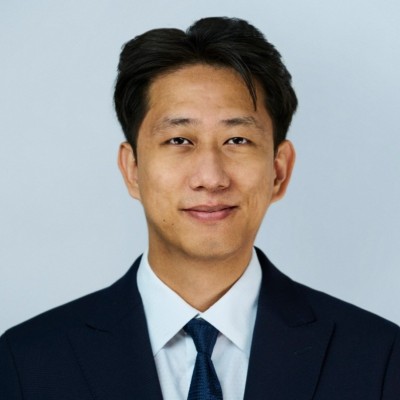
About the author
Tenzin Langdun
AI Expert & Marketing Lead at Hierarchy
Tenzin is an AI expert and marketing lead with an MSc in Artificial Intelligence from the University of Bath and over 10 years of marketing experience across strategy, paid acquisition, and SEO. He has held roles at leading organisations including KPMG, EY, Siemens, and Adnovum — with expertise in AI, cybersecurity, audit and consulting, and the insurance sector. Together with Martin Oswald, he co-authored an award-winning research paper on AI-based cancer detection, published in Nature and recognised with the National Siemens Excellence Award and the Lab Sciences Award.