AI Automation for SMEs: Where to Start in 2026 – and Where Not To
AI automation for SMEs: which processes pay off first in 2026, how to weigh effort against risk, and why keeping a human in the loop still matters.
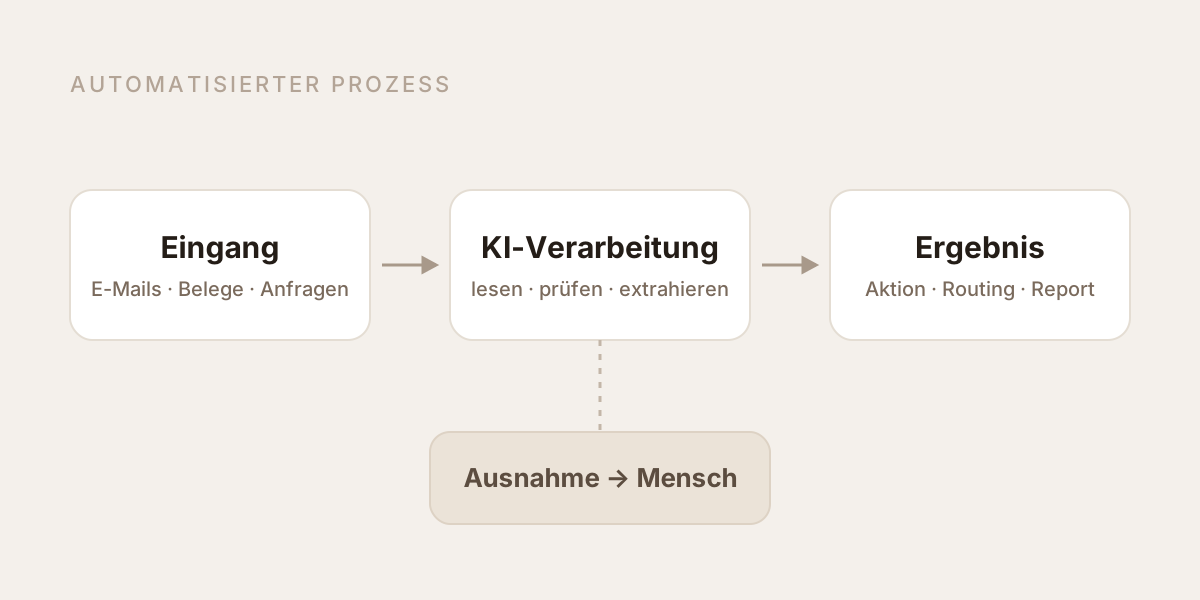
AI automation for SMEs means handing recurring tasks to AI-powered systems – from invoice processing to lead routing. The right place to start in 2026 is with clearly defined, high-volume processes that follow unambiguous rules. Complex decisions stay with people.
According to Bitkom, around 41% of companies will be using AI in 2026 – with a clear competitive advantage for early adopters. For cleanly scoped processes, efficiency gains of 40–60% are realistic. So the question is less whether than where you begin.
What is AI automation – and how does it differ from traditional automation?
Traditional automation (such as RPA) follows rigid if-then rules and breaks down as soon as inputs are unstructured. AI automation understands language, documents and context: it reads an incoming email, extracts the relevant fields from a PDF invoice, or assesses the tone of a customer enquiry – and only then hands off to a rule-based workflow.
For SMEs, that means even processes once considered "too fuzzy" for automation are now within reach.
Which processes should SMEs automate first?
Start where volume is high and ambiguity is low. These candidates deliver the fastest return:
| Process | Setup effort | Impact |
|---|---|---|
| Invoice and document processing | low | high |
| Lead qualification & routing | low | high |
| Standard customer service requests | medium | high |
| Reporting & dashboards | low | medium |
| Quote and document generation | medium | medium |
How do I know whether a process is a good fit?
A simple test separates good candidates from bad ones:
- Volume: Does it happen often enough to justify the setup?
- Rules: Can the standard case be described clearly?
- Data: Is the required information available digitally?
- Cost of errors: Is a single mistake tolerable or critical?
What does AI automation cost – and when does it pay off?
The most expensive mistake is starting with a large platform instead of a concrete process. Take a bottleneck with clear volume, automate the standard case, and measure the result in time saved or additional appointments booked. A first full cycle – audit, build, optimisation – is typically measurable within around 90 days.
Where should you (still) not automate in 2026?
Not every process belongs on the automation list. Be cautious with rare decisions that carry high downstream costs, with unclear rules, and with regulatorily sensitive areas such as recruiting or creditworthiness checks. From August 2026, the EU AI Act applies here as well – human oversight is then not optional but mandatory. If you're looking further ahead, it's worth a look at AI agents and agentic AI as the next stage.
How we put this into practice is laid out on our AI automation and process automation for SMEs service pages.
Want to know which process would pay off first in your organisation? Book an introductory call.
Frequently asked questions
- What is AI automation for SMEs?
- AI automation means handing recurring tasks to AI-powered systems – such as invoice processing, lead qualification or standard service requests. Unlike traditional automation, AI can also process unstructured data such as text, emails and documents.
- Which processes can be automated the fastest?
- High-volume processes with clear rules pay off the quickest: document processing, lead routing, reporting and standard customer service requests. These require little setup effort and deliver immediately measurable impact.
- How much does getting started with AI automation cost?
- Getting started often works best with a single, clearly defined process rather than a large platform. What matters is not the budget but a process with high volume and a clear outcome – that way the automation usually pays for itself within a few months.
- Does AI automation replace jobs?
- In practice, AI automation shifts work from clearing the volume to handling the exceptions. The AI takes over the routine, while judgement and escalation stay with people – the team is relieved, not replaced.

About the author
Tenzin Langdun
AI Expert & Marketing Lead at Hierarchy
Tenzin is an AI expert and marketing lead with an MSc in Artificial Intelligence from the University of Bath and over 10 years of marketing experience across strategy, paid acquisition, and SEO. He has held roles at leading organisations including KPMG, EY, Siemens, and Adnovum — with expertise in AI, cybersecurity, audit and consulting, and the insurance sector. Together with Martin Oswald, he co-authored an award-winning research paper on AI-based cancer detection, published in Nature and recognised with the National Siemens Excellence Award and the Lab Sciences Award.