Automated Lead Generation for B2B SMEs: From Click to Qualified Meeting
Automated lead generation for B2B SMEs: ICP, lead scoring, CRM-driven routing and AI – how a single click turns into a qualified meeting with no manual effort.
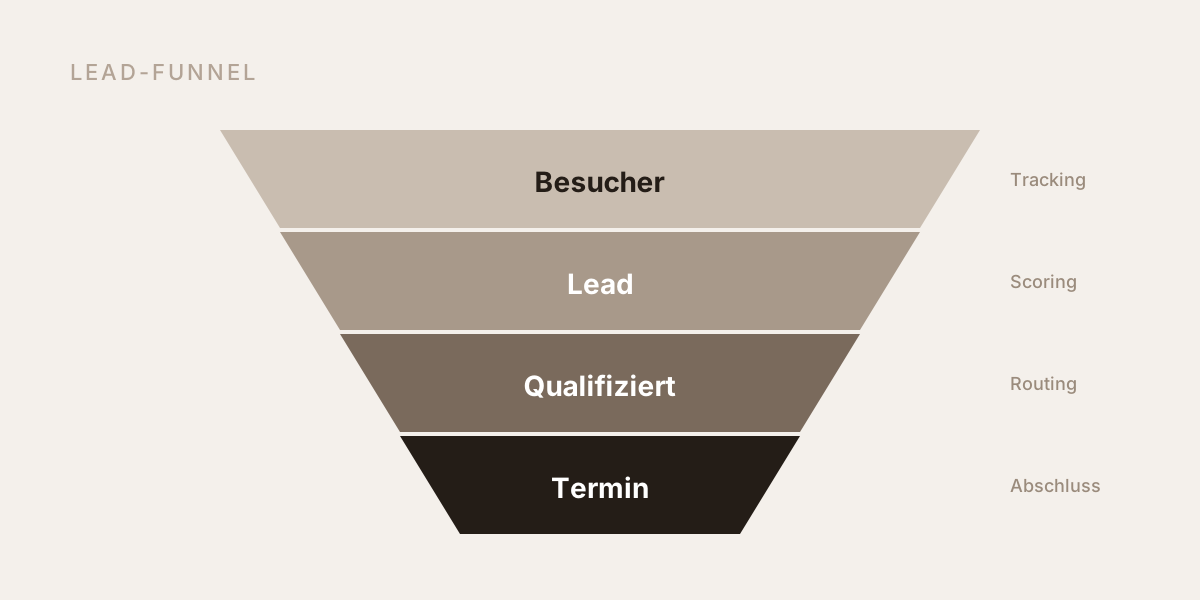
Automated lead generation connects your website, CRM and AI so that a single click turns into a qualified meeting with no manual effort: leads are enriched, evaluated by fit and behaviour (lead scoring) and routed automatically. SMEs with consistently digitalised processes achieve measurably higher close rates – on average around a third more.
The point is not to generate more leads, but to make the path from the first signal to the conversation smooth and traceable.
What is automated lead generation?
Instead of someone manually reviewing, researching and distributing new contacts, a system handles the routine: it recognises a relevant contact, enriches it with data, assesses its readiness to buy and triggers the right next step. People come in where it counts – in the conversation and at the close.
How does the funnel work technically?
A lean flow makes the principle visible:
// Enrich, score, route – sales only sees what matters.
async function onNewLead(lead: InboundLead) {
  const enriched = await enrich(lead);          // company size, industry, role
  const score = scoreLead(enriched);            // fit + behaviour

  if (score >= 80) return assignTo("sales", enriched);   // book meeting now
  if (score >= 40) return addToNurture(enriched);        // automated follow-up
  return archive(enriched);                              // not (yet) a fit
}
Which building blocks do I need?
| Building block | Purpose |
|---|---|
| Ideal customer profile | defines who even counts as a good lead |
| Website tracking | captures behaviour as a buying signal |
| CRM | central data foundation for contacts and pipeline |
| Lead scoring | prioritises by fit and behaviour |
| Routing & workflows | assigns leads and triggers follow-ups |
| Nurturing | keeps not-yet-ready leads warm |
Where does AI help – and where do people?
AI is strong at enriching, scoring and preparing: it researches companies, summarises context and drafts initial messages. The close – building trust, handling objections, negotiating – is handled by people. This division of labour is the same as with AI agents: volume automated, judgement human.
Get started in 5 steps
- Sharpen your ICP: analyse your top 10 existing customers and capture their commonalities.
- Connect your CRM: link your website and forms to HubSpot, Pipedrive or similar.
- Define scoring: set clear rules for fit and behaviour.
- Automate routing: set up assignment, templates and follow-ups.
- Measure & optimise: track the close rate by source and refine.
This is part of a bigger picture – growth through systems rather than manual work – and fits cleanly into AI automation for mid-sized companies.
Want to automate your lead process? That is exactly what we build as a marketing automation agency - book an intro call.
Frequently asked questions
- What is automated lead generation?
- Automated lead generation connects your website, CRM and AI so that incoming contacts are enriched, evaluated by fit and behaviour (lead scoring) and routed to the right person with no manual effort – all the way to a prepared meeting.
- Which tools do I need for lead automation?
- At the core, a CRM as the central data foundation (such as HubSpot or Pipedrive), website tracking, enrichment and scoring logic, plus workflow automation for routing and follow-up. What matters is clean integration, not the number of tools.
- What is lead scoring?
- Lead scoring evaluates contacts based on profile (do they match the ideal customer profile?) and behaviour (page visits, downloads, responses). From the score, the system derives priority and the next step.
- Does this also work for small B2B companies?
- Yes. Small teams benefit in particular, because automation handles the routine and focuses the few available hours on qualified conversations. Studies show significantly higher close rates where processes are consistently digitalised.
About the author
Tenzin Langdun
AI Expert & Marketing Lead at Hierarchy
Tenzin is an AI expert and marketing lead with an MSc in Artificial Intelligence from the University of Bath and over 10 years of marketing experience across strategy, paid acquisition, and SEO. He has held roles at leading organisations including KPMG, EY, Siemens, and Adnovum — with expertise in AI, cybersecurity, audit and consulting, and the insurance sector. Together with Martin Oswald, he co-authored an award-winning research paper on AI-based cancer detection, published in Nature and recognised with the National Siemens Excellence Award and the Lab Sciences Award.