Finding a Marketing Agency in Zurich: What SMEs Should Look For
Finding a marketing agency in Zurich for your SME: what matters in strategy, execution, and AI, which red flags to watch for, and which questions belong in the first call.
You can recognise a good marketing agency for your SME in Zurich by the fact that strategy and execution live in one team, you retain full control over your own data, and success is measured by business outcomes rather than vanity metrics.
The search for a marketing agency in Zurich can quickly become overwhelming for an SME: consultancies that only deliver slides, performance shops that optimise for reach instead of revenue, and providers who split strategy, advertising, automation, and AI across four separate contracts. This article sums up what actually matters when making your choice, as a checklist rather than a sales pitch.
What should a marketing agency deliver for SMEs in Switzerland?
The most important question is not whether an agency builds a beautiful campaign, but whether it combines strategy and execution in one team. Pure consulting leaves you with a concept and an invoice, while the actual work, the building, testing, and optimising, lands back on your plate. For an SME with limited internal resources, that is precisely the most expensive scenario.
Make sure the same senior people who design the strategy are also involved in the execution. Junior teams behind a senior pitch are a common pattern. A partner who thinks of marketing as a system rather than a sequence of individual campaigns builds something that becomes more valuable every month instead of decaying, more on this in Growth Through Systems.
What exactly should I look for? (Checklist)
- Strategy + execution in one team – not just the concept, but the build as well.
- Senior people in the daily work – the people from the pitch are also on the project.
- Full access to your own accounts and data – ad accounts, analytics, and CRM run under your name.
- Measurable goals defined upfront – lead quality, conversion, time saved instead of impressions.
- Short, cancellable term – quality binds you, not the contract.
- Transparent reporting – traceable, not polished.
- Local market understanding – understands Swiss buyers, language, and context.
Which red flags should warn SMEs?
Some signals argue against a partner regardless of the pitch. They cost you money, control, or both further down the line.
| Red Flag | Why It's a Problem |
|---|---|
| Focus on vanity metrics | Reach with no link to revenue or leads |
| No access to your own accounts | You lose your data and negotiating power |
| Long, rigid contract lock-in | Lock-in replaces performance |
| Consulting only, no execution | Concept without impact, the work stays with you |
| Opaque reporting | Success cannot be verified |
The point about accounts is especially critical: ad accounts, tracking, and CRM must run under your name. If an agency refuses to hand over that ownership, your most important marketing asset, the data, effectively belongs to someone else.
Local in Zurich or remote – which is better for an SME?
The honest answer: both, in the right mix. A partner based in Zurich, in our case at Wolframplatz 15, 8045 Zürich, understands the Swiss market, the language of buyers, and the expectations around reliability. The day-to-day work, campaign setup, reporting, workflows, happens digitally anyway. What matters is not the distance in kilometres, but the closeness to the business: does the partner understand how you sell, to whom, and why?
Why is a combined partner for marketing, automation, and AI better?
Many SMEs piece things together: one agency for advertising, a freelancer for automation, a tool vendor for AI. Context is lost at each of these handoffs, and no one owns the overall outcome. A partner who builds marketing, process automation, and custom AI on a shared data model avoids exactly that.
The effect is tangible: a lead from a campaign flows seamlessly into an automated workflow, an AI qualifies it according to your criteria, and a human decides where it matters, human-in-the-loop instead of a black box. That way, improvements stack instead of cancelling each other out. What this looks like in practice is shown in AI Automation for the Mid-Market and Process Automation for SMEs in Switzerland.
Which questions belong in the first call?
A good first call reveals more about an agency than any pitch. Ask specifically:
- Who actually works on my project, and how senior are they?
- Do all accounts and data run under my name?
- How long is the minimum term, and how do I cancel?
- Which three metrics do we use to measure success in the first 90 days?
- What happens to my data and workflows if we part ways?
- Can you not only advise, but also build and operate?
Anyone who dodges these questions or answers with reach instead of results has already given you the most important information.
How do I measure whether the collaboration is working?
Marketing success for an SME is not a gut feeling, but a question of a few clear metrics. Three of them almost always hold:
- Time saved – how many hours of manual work the system replaces each week.
- Lead quality – the share of enquiries that genuinely fit your offering.
- Conversion – how many of those leads turn into conversations and deals.
Impressions, clicks, and followers are leading indicators at best, not a result. If you also want to stay visible in AI search, you should additionally watch for mentions in AI answers; why this matters is explained in From SEO to GEO. A good agency defines these metrics with you upfront and reports against them honestly, even when a number occasionally falls short. If you're specifically after an SEO agency rather than a broad marketing agency, the checklist in SEO Agency Switzerland: 7 criteria walks you through the specific selection criteria.
Choosing a marketing agency in Zurich is ultimately a decision about control, clarity, and shared responsibility, not about the prettiest deck. If you want to know where your marketing is still manual today and where a system would deliver more: let's talk.
Frequently asked questions
- What should an SME look for when choosing a marketing agency in Zurich?
- What matters most is that strategy and execution live in one team rather than being sold as pure consulting. Look for senior people who actually work on the project, full access to your own accounts and data, and clearly measurable goals instead of vanity metrics. A short, cancellable contract term is a good sign of confidence.
- Should a marketing agency be based locally in Zurich, or is a remote partner enough?
- For most SMEs, closeness to the business matters more than the physical address. A partner in Zurich understands the Swiss market, language, and buyer culture, but the ongoing work happens remotely anyway. What counts is a mix: regular on-site meetings for strategy and trust, and fast digital collaboration in day-to-day operations.
- Why is a combined partner for marketing, automation, and AI better than several separate providers?
- When marketing, automation, and AI sit with different providers, information is lost at every handoff and no one owns the overall outcome. A partner with a shared data model builds campaigns, workflows, and AI on the same foundation, so improvements stack instead of cancelling each other out. That reduces friction and makes results traceable.
- How do you measure whether a marketing agency is successful?
- Measure against business outcomes, not reach: time saved across the team, the quality of incoming leads, and conversion along the funnel. Pure vanity metrics like impressions or followers say little about the contribution to revenue. A good agency defines these metrics with you upfront and reports against them transparently.
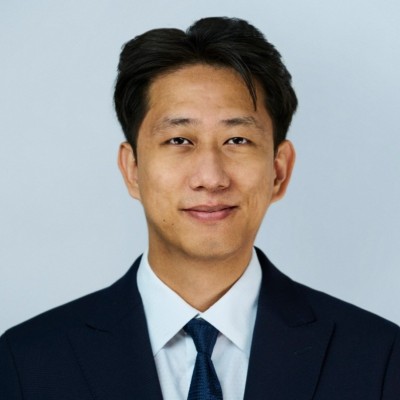
About the author
Tenzin Langdun
AI Expert & Marketing Lead at Hierarchy
Tenzin is an AI expert and marketing lead with an MSc in Artificial Intelligence from the University of Bath and over 10 years of marketing experience across strategy, paid acquisition, and SEO. He has held roles at leading organisations including KPMG, EY, Siemens, and Adnovum — with expertise in AI, cybersecurity, audit and consulting, and the insurance sector. Together with Martin Oswald, he co-authored an award-winning research paper on AI-based cancer detection, published in Nature and recognised with the National Siemens Excellence Award and the Lab Sciences Award.